
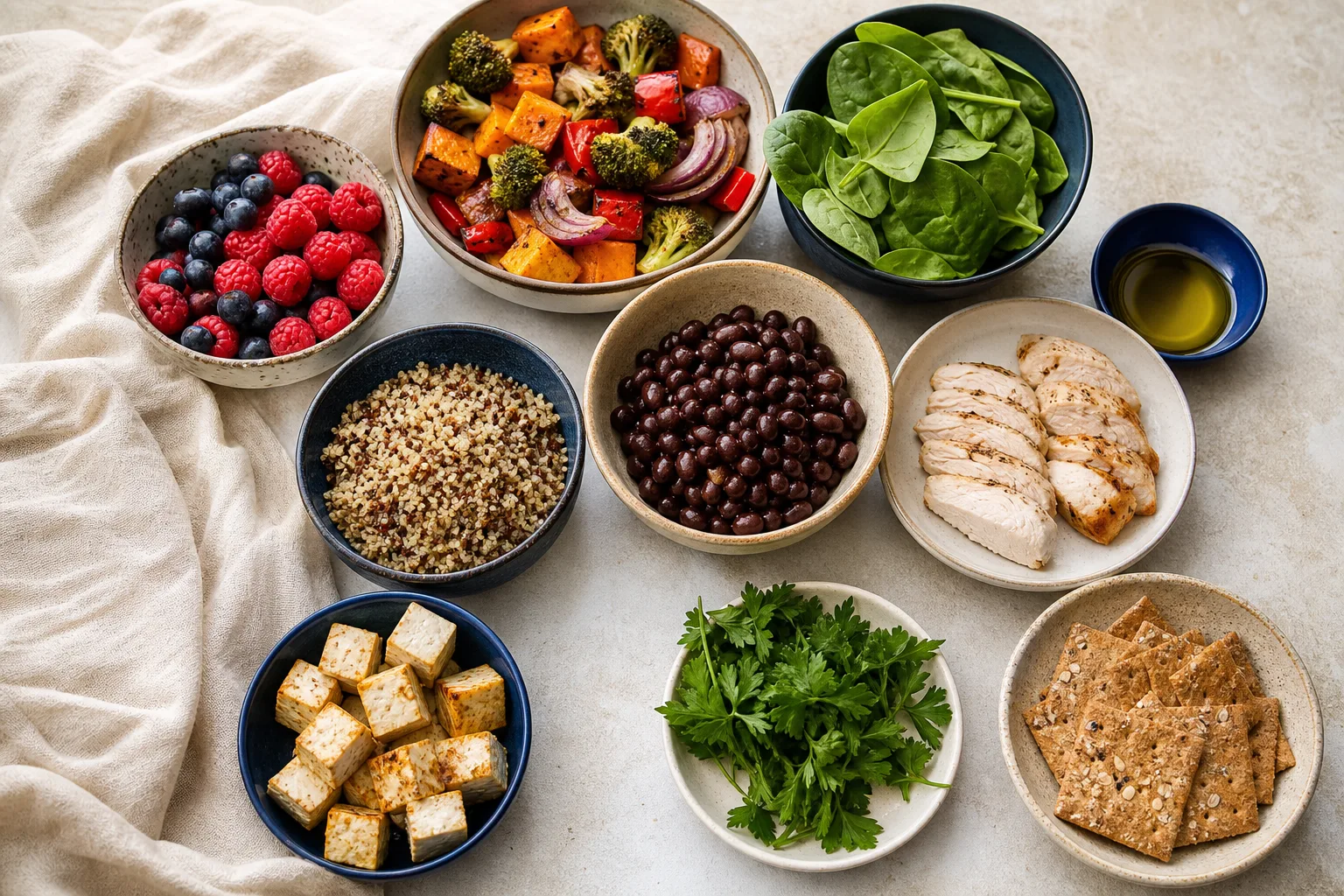
Short answer: A flexible GLP-1 plate combines a familiar protein food, produce, a fiber-containing grain or other carbohydrate, and flavor in a portion that can be adjusted. It is a planning model, not a prescribed medical diet.
How to apply the short answer
A plate framework is useful because it turns broad food guidance into a visible meal without requiring a special product. The components can be arranged as a bowl, soup, wrap, toast, snack plate, or traditional plated meal.
No single plate pattern fits every adult. Culture, allergies, access, cooking skills, preferences, and individualized clinical guidance all matter. Use this framework to organize choices you already make, not to label foods as morally good or bad.
Start with the GLP-1 foods guide to place the article inside its main food-planning framework.
Start with a protein food you actually use
Choose eggs, dairy foods, fish, poultry, tofu, tempeh, beans, lentils, or another familiar option according to your dietary pattern. The practical question is whether it is available, appealing, affordable, and easy to portion—not whether it can be marketed as a special GLP-1 food.
Turn this idea into one written decision before the week begins. Note the smallest useful version, a familiar alternative, and anything that must stay fixed because of an allergy, preference, budget, or food-safety rule. That makes a flexible protein, produce, and whole-grain plate: start with a protein food you actually use a real planning tool instead of another standard to meet.
Add produce in a form that fits the meal
Fresh, frozen, canned, cooked, blended, or raw produce can all have a place. Select texture and preparation according to preference and any individual advice you have received. Frozen vegetables and fruit can reduce waste because the unused amount remains available for another meal.
Keep the portion adjustable at serving time. Store components separately when practical, serve a modest amount first, and keep the remainder safely chilled rather than placing the full recipe on the plate. In the context of a flexible protein, produce, and whole-grain plate: add produce in a form that fits the meal, flexibility is a design feature, not a failure to follow the plan.
Choose a useful carbohydrate component
Whole grains, potatoes, beans, fruit, bread, rice, pasta, and other carbohydrate foods can contribute energy, fiber, texture, and enjoyment. This article does not prescribe a carbohydrate amount. Choose a manageable portion and a format that works with the rest of the meal.
Make the shopping list reflect the actual household. Check package sizes, choose ingredients that can appear in more than one meal, and give every perishable item a first use and a backup use. This is how a flexible protein, produce, and whole-grain plate: choose a useful carbohydrate component can reduce friction without creating an oversized refrigerator inventory.
For a connected kitchen example, continue with protein with smaller portions while the practical decision above is still in view.
Use fats, sauces, herbs, and spices intentionally
Flavor helps an ordinary combination become a meal worth repeating. Olive oil, avocado, nuts, seeds, yogurt sauces, herbs, citrus, and spices are possible flavor builders, subject to allergies and preferences. Portion them for the recipe rather than leaving every container on the counter.
Build a low-effort route into the plan. A prepared component, freezer portion, shelf-stable backup, or five-minute assembly can protect the week when time or appetite differs from what was expected. The aim of a flexible protein, produce, and whole-grain plate: use fats, sauces, herbs, and spices intentionally is continuity, not a perfectly repeated schedule.
Keep the components separate when flexibility matters
Separate storage allows one person to assemble a small bowl while another builds a larger meal. It also lets tomorrow’s lunch use different seasonings. Label cooked components, keep cold foods cold, and follow established storage guidance for each ingredient.
Treat storage as part of the recipe. Cool leftovers promptly, use shallow covered containers where appropriate, label dates, follow recognized storage guidance, and discard food when safety is uncertain. Good storage makes a flexible protein, produce, and whole-grain plate: keep the components separate when flexibility matters more useful while keeping convenience separate from guesswork.
Evaluate the plate by usefulness, not perfection
A practical plate is one you can prepare, eat, store safely, and afford. It does not need to look like an infographic. If a meal is missing a planned component, note what would make the next version easier rather than treating the current meal as a nutritional verdict.
Review the result without grading the person. Record what was useful, what remained, which package was too large, and which option was easy to repeat. Use those observations to simplify the next version of a flexible protein, produce, and whole-grain plate: evaluate the plate by usefulness, not perfection rather than adding more rules or making outcome promises.
Put the framework through three real-life checks
The routine check: Ask where a flexible protein, produce, and whole-grain plate fits on the busiest ordinary day, not only on an ideal weekend. Identify the equipment, time, storage, and shopping step it requires. If the plan depends on a long preparation window that rarely exists, reduce the number of components or name a genuinely easier route. A strong plan should remain understandable when attention is limited.
The flexibility check: Start with “Choose one familiar protein food.” and “Add produce in a usable format.,” then imagine that schedule, appetite, or household plans change. The food should still have a safe next use, and the person should still have an acceptable choice. Flexibility does not remove boundaries: allergens, sanitation, storage temperatures, clinician-provided instructions, and personal consent remain fixed.
The evidence check: Use “Include a preferred grain or carbohydrate.” as a prompt to separate observable kitchen facts from health assumptions. It is reasonable to record that a package was too large or a recipe was easy to reheat. It is not reasonable for a meal planner to infer a diagnosis, medication effect, or clinical outcome. Keep private wellness information out of marketing, analytics, affiliate decisions, and editorial performance reports.
Within “Protein, Produce, and Whole Grains: Building a Flexible GLP-1 Plate,” one concrete application is the Lemon-Herb Chicken Quinoa Lunch for GLP-1 Meal Prep recipe, where the ingredients, portioning, substitutions, and storage notes can be evaluated in context.
A practical checklist
- Choose one familiar protein food.
- Add produce in a usable format.
- Include a preferred grain or carbohydrate.
- Use flavor that makes repetition appealing.
- Store unused components separately and safely.
Frequently asked questions
Is there an official GLP-1 plate?
There is no single universal plate required for every adult using a GLP-1 medication. This is a flexible food-planning framework, not a medical prescription.
Do whole grains have to appear at every meal?
No. Food choices vary across the day and across cultures. Individual requirements should come from a qualified professional, not a generic plate graphic.
Can the same framework make a small meal?
Yes. The components can be scaled and served as a small bowl, toast, soup cup, or snack plate while the remaining food stays safely stored.
Safety, evidence, and scope
GLP1DIET presents a flexible protein, produce, and whole-grain plate as general-wellness planning for adults, not individualized clinical nutrition. Medication selection, adverse effects, symptoms, treatment, and dosing belong with an appropriately licensed clinician.
The maintenance record for this topic tracks sources, supported claims, review dates, and link status. Search demand and conversion goals cannot lower the evidence threshold or turn private wellness activity into an editorial signal. For this page, that control is applied specifically to a flexible protein, produce, and whole-grain plate.
Editorial scope for a flexible protein, produce, and whole-grain plate: This adult general-wellness article is released only when its sources, claims, links, and any required reviewer identity satisfy the editorial workflow.
A flexible GLP-1 plate combines a manageable protein food with produce, an optional grain or starchy food, flavor, and a portion that can change. The pattern is a planning prompt, not a prescription, and no single arrangement is universally best. Compare plate combinations by familiarity, texture, preparation time, storage, cost, household use, and whether the components can be served in different amounts. Choose the protein food first, add produce that fits the method, then include a grain or starch when it makes the meal more practical.Build a flexible GLP-1 plate
Compare the options with concrete criteria
Apply the guide to the next meal