
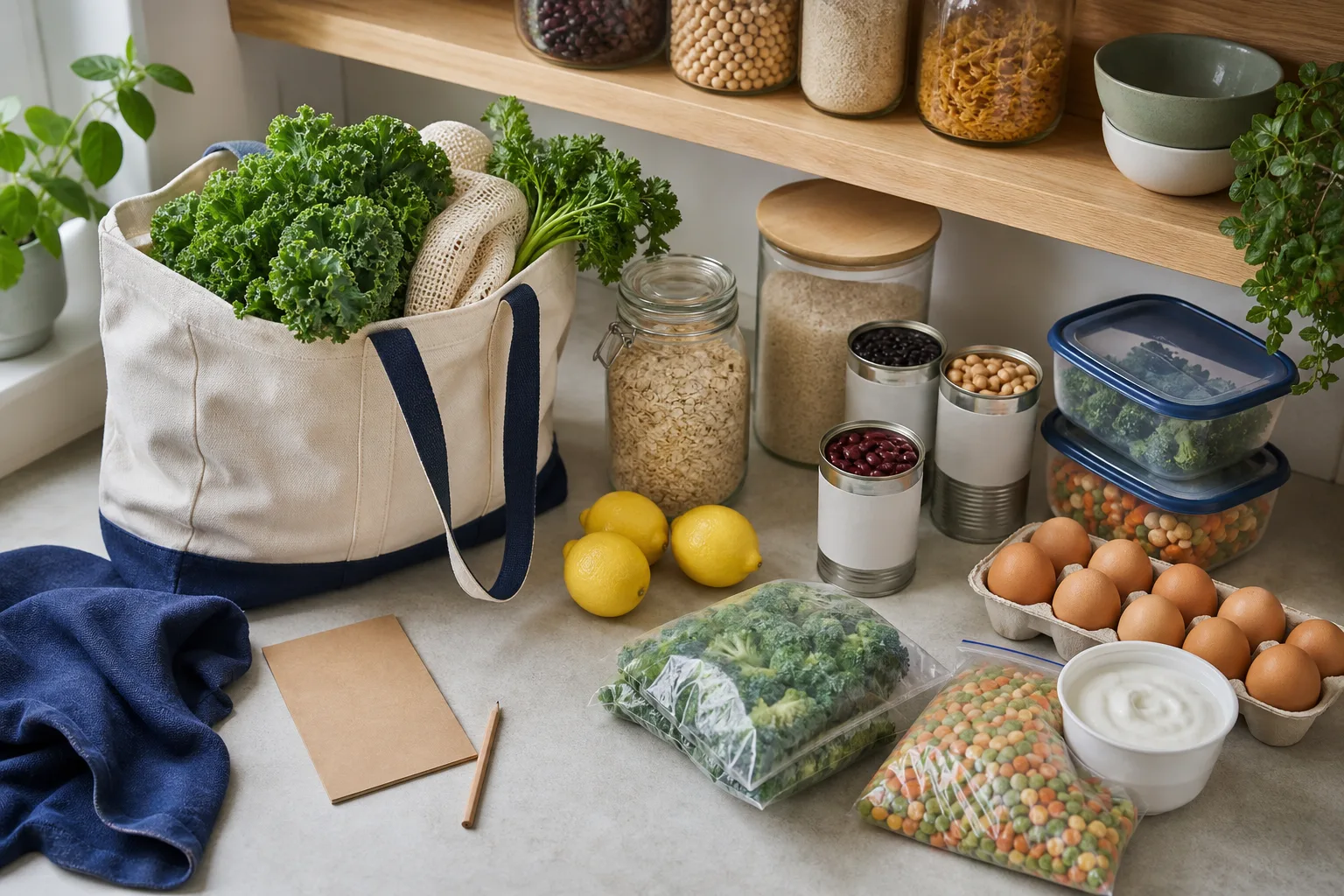
GLP-1 Diet planning treats small batch recipes for one as a practical food-and-routine question. The guide connects the answer to an observable meal, grocery, preparation, or storage decision.
Short answer: To scale recipes for one or two servings, divide countable ingredients, convert measurements carefully, use appropriately sized cookware, and avoid improvising changes to baking, canning, or food-preservation formulas.
How to apply the short answer
Small-batch cooking begins with choosing the right recipe. Soups, grain bowls, sheet-pan meals, pasta sauces, and skillet dishes often divide cleanly. Baking and food preservation can depend on ratios that should not be casually altered.
Write the reduced quantities before starting. Mental division while cooking is an easy way to halve one ingredient and forget another, especially when the original recipe changes units between teaspoons, cups, and package counts.
Start with the shopping for smaller portions to place the article inside its main food-planning framework.
Start with countable ingredients
One fillet, two eggs, half a tofu block, one potato, or a measured portion of beans creates a clear starting point. Decide how the unused package will be stored and used. Scaling the recipe does not help if the remaining ingredients are discarded.
Turn this idea into one written decision before the week begins. Note the smallest useful version, a familiar alternative, and anything that must stay fixed because of an allergy, preference, budget, or food-safety rule. That makes scaling recipes for one or two servings: start with countable ingredients a real planning tool instead of another standard to meet.
Use weight when awkward fractions appear
A kitchen scale can divide ingredients such as a block of tofu, package of meat, vegetables, or dough more accurately than guessing at a third of a cup. The scale is a cooking tool here, not a weight-management device. Follow the recipe’s units consistently.
Keep the portion adjustable at serving time. Store components separately when practical, serve a modest amount first, and keep the remainder safely chilled rather than placing the full recipe on the plate. In the context of scaling recipes for one or two servings: use weight when awkward fractions appear, flexibility is a design feature, not a failure to follow the plan.
Match cookware to the reduced quantity
A small portion spread across a large pan can dry or cook faster; batter in the wrong-size dish can change depth and timing. Use a smaller skillet, sheet pan area, saucepan, or tested baking vessel, and monitor doneness with an appropriate food thermometer where required.
Make the shopping list reflect the actual household. Check package sizes, choose ingredients that can appear in more than one meal, and give every perishable item a first use and a backup use. This is how scaling recipes for one or two servings: match cookware to the reduced quantity can reduce friction without creating an oversized refrigerator inventory.
For a connected kitchen example, continue with reducing food waste while the practical decision above is still in view.
Treat cooking time as a new observation
A halved recipe does not always take exactly half the time. Thickness, pan size, heat transfer, and starting temperature matter. Begin checking earlier while still using verified safe minimum temperatures and recipe-specific indicators.
Build a low-effort route into the plan. A prepared component, freezer portion, shelf-stable backup, or five-minute assembly can protect the week when time or appetite differs from what was expected. The aim of scaling recipes for one or two servings: treat cooking time as a new observation is continuity, not a perfectly repeated schedule.
Know what should not be casually scaled
Home canning, fermentation, curing, and preservation recipes rely on tested ratios and processes. Some baked goods also depend on pan dimensions and chemical balance. Use a tested small-batch source rather than improvising safety-critical changes.
Treat storage as part of the recipe. Cool leftovers promptly, use shallow covered containers where appropriate, label dates, follow recognized storage guidance, and discard food when safety is uncertain. Good storage makes scaling recipes for one or two servings: know what should not be casually scaled more useful while keeping convenience separate from guesswork.
Create a plan for package remainders
Freeze the unused half where safe, assign it to another meal, or choose a different package format. Half a can of beans can join soup; extra yogurt can become breakfast; remaining vegetables can be roasted. Label opened items so the second use actually happens.
Review the result without grading the person. Record what was useful, what remained, which package was too large, and which option was easy to repeat. Use those observations to simplify the next version of scaling recipes for one or two servings: create a plan for package remainders rather than adding more rules or making outcome promises.
Put the framework through three real-life checks
The routine check: Ask where scaling recipes for one or two servings fits on the busiest ordinary day, not only on an ideal weekend. Identify the equipment, time, storage, and shopping step it requires. If the plan depends on a long preparation window that rarely exists, reduce the number of components or name a genuinely easier route. A strong plan should remain understandable when attention is limited.
The flexibility check: Start with “Write reduced amounts before cooking.” and “Use weight for awkward fractions.,” then imagine that schedule, appetite, or household plans change. The food should still have a safe next use, and the person should still have an acceptable choice. Flexibility does not remove boundaries: allergens, sanitation, storage temperatures, clinician-provided instructions, and personal consent remain fixed.
The evidence check: Use “Choose correctly sized cookware.” as a prompt to separate observable kitchen facts from health assumptions. It is reasonable to record that a package was too large or a recipe was easy to reheat. It is not reasonable for a meal planner to infer a diagnosis, medication effect, or clinical outcome. Keep private wellness information out of marketing, analytics, affiliate decisions, and editorial performance reports.
Within “How to Scale Recipes Down for One or Two Servings,” one concrete application is the Make-Ahead Egg Bites for a GLP-1 Breakfast recipe, where the ingredients, portioning, substitutions, and storage notes can be evaluated in context.
A practical checklist
- Write reduced amounts before cooking.
- Use weight for awkward fractions.
- Choose correctly sized cookware.
- Check doneness rather than halving time.
- Use tested preservation and baking recipes.
Frequently asked questions
Can I halve every ingredient?
Not safely in every recipe. Savory dishes often adapt well, while baking, canning, curing, and preservation may require tested ratios and equipment.
Does half the food mean half the cooking time?
Usually not. Check earlier, account for thickness and cookware, and still meet all required safe cooking temperatures.
What should I do with half an egg?
For some recipes, beat the egg and weigh or measure half, then use the remainder promptly in another cooked dish. For baking, a tested small-batch recipe is more reliable.
Safety, evidence, and scope
This discussion of scaling recipes for one or two servings helps adults organize ordinary food choices. It does not diagnose or treat a condition, prescribe a diet, recommend medication or supplements, provide dosing, or interpret persistent symptoms and hydration concerns.
Editors keep food-planning observations separate from medical claims, verify health-adjacent source records, and require qualified review where the risk tier demands it. Titles, snippets, social copy, and commercial placements may never strengthen the published wording. For this page, that control is applied specifically to scaling recipes for one or two servings.
Editorial scope for scaling recipes for one or two servings: This adult general-wellness article is released only when its sources, claims, links, and any required reviewer identity satisfy the editorial workflow.
Scaling a recipe for one or two servings means adjusting ingredient amounts, pan size, cooking surface, and doneness checks together. Dividing every number is only the first step because a smaller batch can cook faster, evaporate differently, and fit a different container. Compare the original and reduced recipe by pan depth, exposed surface, cooking method, minimum safe batch, storage value, and ingredients that do not divide cleanly. Write the new yield first, calculate each ingredient, choose the pan, and begin checking doneness earlier than the original recipe suggests.A reliable way to scale a recipe
Compare the options with concrete criteria
Apply the guide to the next meal