
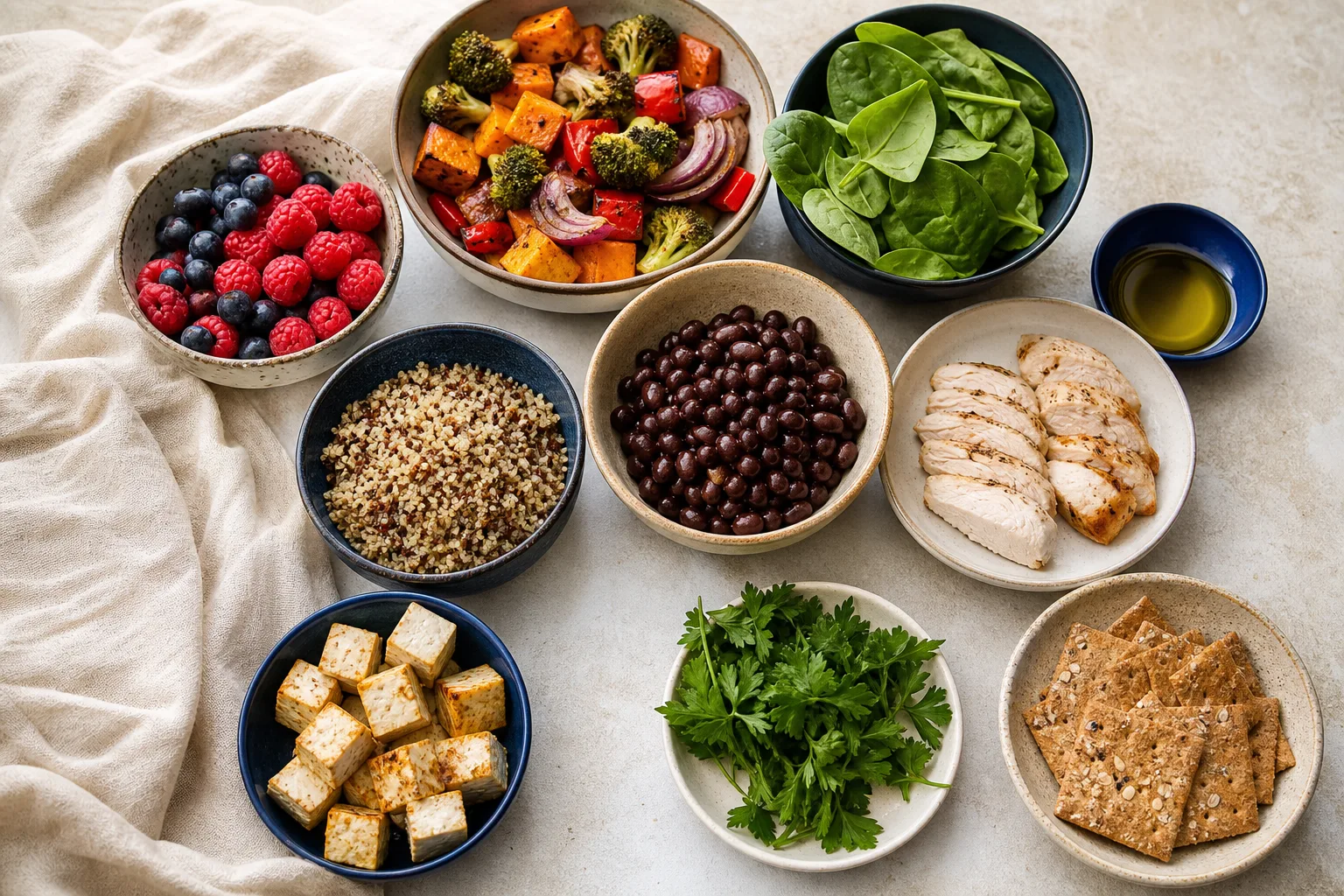
Short answer: Fiber-forward GLP-1 meal planning includes familiar vegetables, fruit, beans, lentils, whole grains, nuts, and seeds in practical portions. Increase or adjust foods only in ways that fit personal tolerance and clinical guidance.
How to apply the short answer
Fiber is found across many ordinary plant foods, not in one branded ingredient. A useful plan distributes those foods through meals that are affordable, appealing, and realistic to prepare.
More is not automatically better for every person or every day. This general guide does not set a fiber target or advise how to respond to gastrointestinal symptoms. Individual changes and symptom questions belong with a qualified clinician.
Start with the fiber-forward GLP-1 foods to place the article inside its main food-planning framework.
Build a produce rotation, not an impossible rainbow
Choose several fruits and vegetables you reliably use in fresh, frozen, or canned form. Rotate options across the week and favor package sizes that match the household. Cooked, peeled, blended, or raw formats have different textures; preference and individualized guidance should direct the choice.
Turn this idea into one written decision before the week begins. Note the smallest useful version, a familiar alternative, and anything that must stay fixed because of an allergy, preference, budget, or food-safety rule. That makes fiber-forward everyday food planning: build a produce rotation, not an impossible rainbow a real planning tool instead of another standard to meet.
Use beans and lentils as flexible components
Beans and lentils can appear in soups, grain bowls, salads, toast toppings, and blended dips. Canned versions reduce preparation time; rinse or season them according to the recipe and dietary needs. Freeze extra cooked legumes in small portions when appropriate.
Keep the portion adjustable at serving time. Store components separately when practical, serve a modest amount first, and keep the remainder safely chilled rather than placing the full recipe on the plate. In the context of fiber-forward everyday food planning: use beans and lentils as flexible components, flexibility is a design feature, not a failure to follow the plan.
Keep whole grains genuinely convenient
Oats, whole-grain bread, brown rice, quinoa, barley, and whole-grain pasta are examples, not requirements. Pick the grains you enjoy and can prepare. Batch only the amount likely to be used, cool cooked grains promptly, and store them according to food-safety guidance.
Make the shopping list reflect the actual household. Check package sizes, choose ingredients that can appear in more than one meal, and give every perishable item a first use and a backup use. This is how fiber-forward everyday food planning: keep whole grains genuinely convenient can reduce friction without creating an oversized refrigerator inventory.
For a connected kitchen example, continue with easy pantry staples while the practical decision above is still in view.
Use nuts and seeds as ingredients, not promises
Nuts, seeds, and nut or seed butters can add texture and flavor, subject to allergies. They should not be presented as treatments or guaranteed appetite tools. Measure what the recipe needs, close packages tightly, and store them to protect quality.
Build a low-effort route into the plan. A prepared component, freezer portion, shelf-stable backup, or five-minute assembly can protect the week when time or appetite differs from what was expected. The aim of fiber-forward everyday food planning: use nuts and seeds as ingredients, not promises is continuity, not a perfectly repeated schedule.
Change one planning variable at a time
When adding an unfamiliar food, avoid redesigning every meal simultaneously. A single new grain, bean dish, or produce option is easier to evaluate and less likely to leave several unused packages. Personal tolerance is not something the platform should infer.
Treat storage as part of the recipe. Cool leftovers promptly, use shallow covered containers where appropriate, label dates, follow recognized storage guidance, and discard food when safety is uncertain. Good storage makes fiber-forward everyday food planning: change one planning variable at a time more useful while keeping convenience separate from guesswork.
Pair fiber education with evidence boundaries
General food-pattern language can be supported by authoritative dietary guidance, while individual digestive claims require greater caution. Editors should verify the exact wording, source date, jurisdiction, and population before publishing any statement that moves beyond simple food description.
Review the result without grading the person. Record what was useful, what remained, which package was too large, and which option was easy to repeat. Use those observations to simplify the next version of fiber-forward everyday food planning: pair fiber education with evidence boundaries rather than adding more rules or making outcome promises.
Put the framework through three real-life checks
The routine check: Ask where fiber-forward everyday food planning fits on the busiest ordinary day, not only on an ideal weekend. Identify the equipment, time, storage, and shopping step it requires. If the plan depends on a long preparation window that rarely exists, reduce the number of components or name a genuinely easier route. A strong plan should remain understandable when attention is limited.
The flexibility check: Start with “List three produce options you will use.” and “Keep one bean or lentil backup.,” then imagine that schedule, appetite, or household plans change. The food should still have a safe next use, and the person should still have an acceptable choice. Flexibility does not remove boundaries: allergens, sanitation, storage temperatures, clinician-provided instructions, and personal consent remain fixed.
The evidence check: Use “Choose one convenient whole grain.” as a prompt to separate observable kitchen facts from health assumptions. It is reasonable to record that a package was too large or a recipe was easy to reheat. It is not reasonable for a meal planner to infer a diagnosis, medication effect, or clinical outcome. Keep private wellness information out of marketing, analytics, affiliate decisions, and editorial performance reports.
Within “Fiber-Forward Foods for Everyday GLP-1 Meal Planning,” one concrete application is the Apple Cinnamon Overnight Oats with Greek Yogurt recipe, where the ingredients, portioning, substitutions, and storage notes can be evaluated in context.
A practical checklist
- List three produce options you will use.
- Keep one bean or lentil backup.
- Choose one convenient whole grain.
- Check nut and seed allergens.
- Make changes gradually with professional guidance when needed.
Frequently asked questions
Which foods contain fiber?
Vegetables, fruit, beans, lentils, whole grains, nuts, and seeds are common sources. Amounts vary, so use verified nutrition data when publishing numbers.
Does everyone need the same fiber target?
No. Individual needs and tolerance vary. A generic article should not replace personalized advice from a qualified clinician or dietitian.
Are fiber supplements required?
This article does not recommend supplements. Questions about a supplement’s suitability, interactions, or use should be directed to a clinician or pharmacist.
Safety, evidence, and scope
Nothing in this approach to fiber-forward everyday food planning creates a required GLP-1 diet. The article supports adult meal organization while leaving symptoms, adequacy assessment, prescribing, treatment, and dosing outside the platform.
The review process distinguishes kitchen facts from clinical inference, checks cited evidence before publication, and keeps advertising, affiliate, analytics, and email systems away from private wellness records. For this page, that control is applied specifically to fiber-forward everyday food planning.
Editorial scope for fiber-forward everyday food planning: This adult general-wellness article is released only when its sources, claims, links, and any required reviewer identity satisfy the editorial workflow.
Fiber-forward GLP-1 food planning uses familiar fruits, vegetables, beans, lentils, whole grains, nuts, and seeds in portions that remain practical. The goal is a usable meal pattern, not a race toward the largest possible fiber number or a promise about symptoms. Compare foods by texture, preparation, fluid needs, package size, familiarity, and how the ingredient fits with protein foods and the rest of the meal. Add one familiar fiber-containing food to an existing meal instead of rebuilding the entire plate around a new ingredient.A practical fiber-forward food choice
Compare the options with concrete criteria
Apply the guide to the next meal