
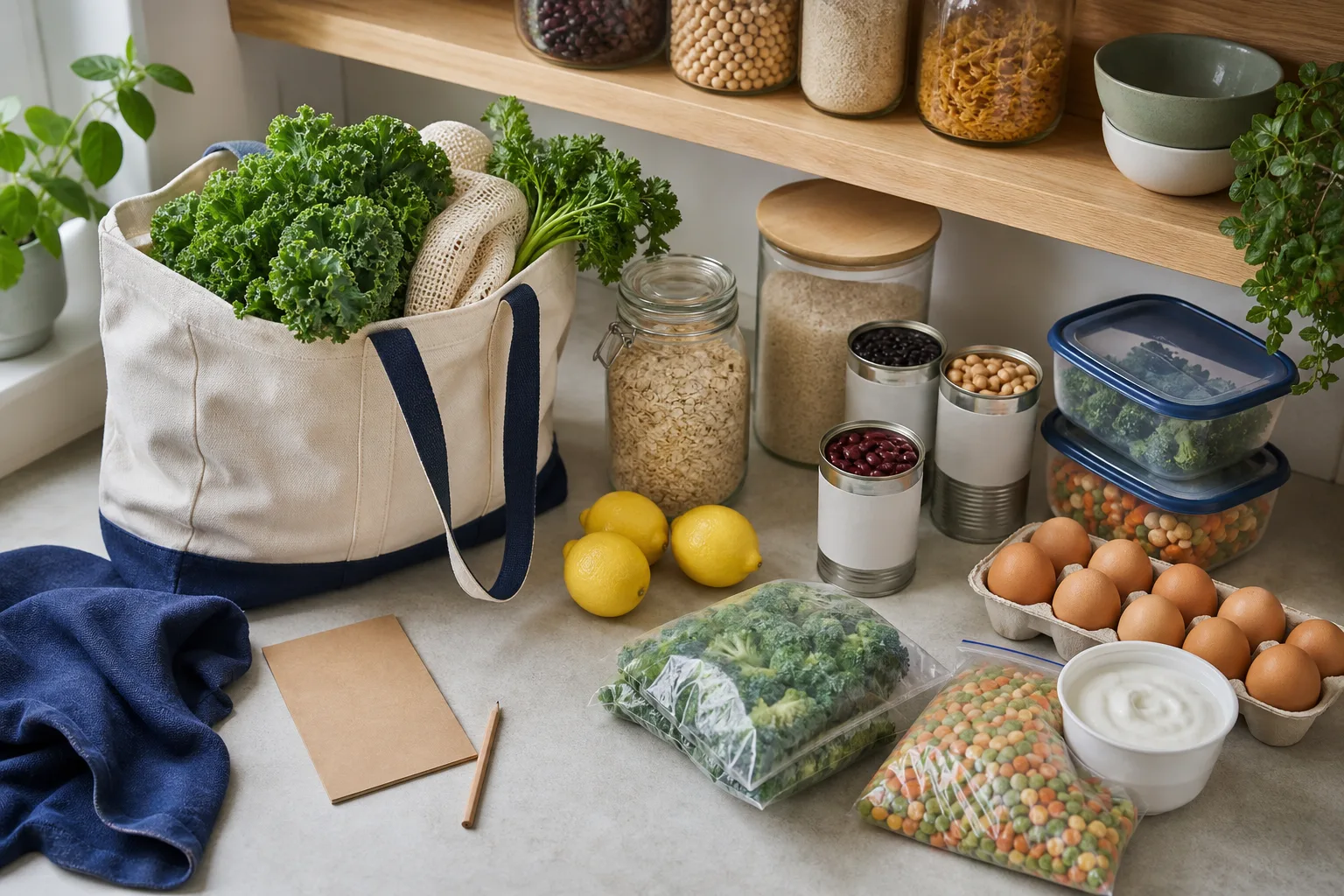
Short answer: A practical GLP-1 pantry contains a small set of flexible grains, beans, canned foods, flavor builders, and freezer backups that combine with fresh protein foods and produce to make easy meals.
How to apply the short answer
A useful pantry is not the longest possible checklist. It contains ingredients the household recognizes, can combine, and replaces often enough to keep fresh. Start with meal roles rather than buying every item on a generic list.
Pantry planning includes the freezer and a few refrigerator staples because many easy meals cross those storage zones. Keep the inventory small enough to see and rotate.
Start with the GLP-1 grocery list to place the article inside its main food-planning framework.
Choose two flexible grains or starches
Oats, rice, quinoa, couscous, pasta, potatoes, tortillas, and whole-grain bread are possibilities. Choose two or three that suit the meals you make. Store dry foods sealed, cool cooked grains promptly, and freeze bread or tortillas in usable portions when helpful.
Turn this idea into one written decision before the week begins. Note the smallest useful version, a familiar alternative, and anything that must stay fixed because of an allergy, preference, budget, or food-safety rule. That makes a practical pantry for easy meals: choose two flexible grains or starches a real planning tool instead of another standard to meet.
Keep beans, lentils, or another shelf-stable protein option
Canned beans, lentils, tuna, salmon, or shelf-stable tofu can support quick meals, subject to dietary choices and allergens. Rotate dates, inspect packaging, and avoid assuming that a shelf-stable item remains safe after opening.
Keep the portion adjustable at serving time. Store components separately when practical, serve a modest amount first, and keep the remainder safely chilled rather than placing the full recipe on the plate. In the context of a practical pantry for easy meals: keep beans, lentils, or another shelf-stable protein option, flexibility is a design feature, not a failure to follow the plan.
Stock produce across fresh, frozen, and canned formats
Frozen vegetables and fruit reduce pressure to use everything immediately. Canned tomatoes, corn, or fruit can support soups and bowls. Compare ingredients and choose formats consistent with individual guidance; no single processing category is automatically superior.
Make the shopping list reflect the actual household. Check package sizes, choose ingredients that can appear in more than one meal, and give every perishable item a first use and a backup use. This is how a practical pantry for easy meals: stock produce across fresh, frozen, and canned formats can reduce friction without creating an oversized refrigerator inventory.
For a connected kitchen example, continue with easy weeknight meals while the practical decision above is still in view.
Use a short flavor-builder shelf
Olive oil or another cooking fat, vinegar, citrus, herbs, spices, mustard, sauces, and broth can turn shared components into different meals. Check allergens and storage after opening. Keep only flavors that recur in the household.
Build a low-effort route into the plan. A prepared component, freezer portion, shelf-stable backup, or five-minute assembly can protect the week when time or appetite differs from what was expected. The aim of a practical pantry for easy meals: use a short flavor-builder shelf is continuity, not a perfectly repeated schedule.
Create three named emergency meals
Examples include oats with yogurt and fruit, beans with rice and frozen vegetables, soup with toast, tuna and crackers, or tofu noodles. Write the combinations on the pantry door so the ingredients have a clear purpose. Replace items after use.
Treat storage as part of the recipe. Cool leftovers promptly, use shallow covered containers where appropriate, label dates, follow recognized storage guidance, and discard food when safety is uncertain. Good storage makes a practical pantry for easy meals: create three named emergency meals more useful while keeping convenience separate from guesswork.
Review the pantry before every shopping list
Move older products forward, discard damaged or expired items according to guidance, and note what was never used. Pantry depth should reflect realistic turnover, not anxiety about having every possible food available.
Review the result without grading the person. Record what was useful, what remained, which package was too large, and which option was easy to repeat. Use those observations to simplify the next version of a practical pantry for easy meals: review the pantry before every shopping list rather than adding more rules or making outcome promises.
Put the framework through three real-life checks
The routine check: Ask where a practical pantry for easy meals fits on the busiest ordinary day, not only on an ideal weekend. Identify the equipment, time, storage, and shopping step it requires. If the plan depends on a long preparation window that rarely exists, reduce the number of components or name a genuinely easier route. A strong plan should remain understandable when attention is limited.
The flexibility check: Start with “Select two grains or starches.” and “Keep one or two shelf-stable protein options.,” then imagine that schedule, appetite, or household plans change. The food should still have a safe next use, and the person should still have an acceptable choice. Flexibility does not remove boundaries: allergens, sanitation, storage temperatures, clinician-provided instructions, and personal consent remain fixed.
The evidence check: Use “Use frozen produce as a waste-reducing backup.” as a prompt to separate observable kitchen facts from health assumptions. It is reasonable to record that a package was too large or a recipe was easy to reheat. It is not reasonable for a meal planner to infer a diagnosis, medication effect, or clinical outcome. Keep private wellness information out of marketing, analytics, affiliate decisions, and editorial performance reports.
Within “A Practical Pantry List for Easy GLP-1 Diet,” one concrete application is the Tuna and White Bean GLP-1 Lunch Cup recipe, where the ingredients, portioning, substitutions, and storage notes can be evaluated in context.
A practical checklist
- Select two grains or starches.
- Keep one or two shelf-stable protein options.
- Use frozen produce as a waste-reducing backup.
- Limit sauces to recurring favorites.
- Name three pantry meals and rotate stock.
Frequently asked questions
Do I need every item on a GLP-1 pantry list?
No. Choose foods that fit your preferences, allergies, culture, budget, storage, and individual guidance. A smaller useful pantry is better than a comprehensive unused one.
Are canned and frozen foods acceptable?
They can be practical components. Review ingredients, allergens, preparation instructions, packaging condition, and any individualized requirements.
How often should the pantry be reviewed?
Check it briefly before shopping and conduct a deeper date and condition review periodically. The best schedule is one the household will maintain.
Safety, evidence, and scope
Adults can use this a practical pantry for easy meals framework to reduce food-planning friction. It makes no clinical outcome promise and offers no diagnosis, treatment, medication comparison, supplement recommendation, or dosing advice.
Editorial QA compares visible copy, metadata, schema, and promotional excerpts so no surface makes a broader promise than the article. Reviewer identity is recorded only when it has been verified through the controlled workflow. For this page, that control is applied specifically to a practical pantry for easy meals.
Editorial scope for a practical pantry for easy meals: This adult general-wellness article is released only when its sources, claims, links, and any required reviewer identity satisfy the editorial workflow.
A practical GLP-1 pantry list contains versatile foods that combine with fresh or frozen ingredients in manageable meals. The list should reflect the household’s actual preferences, allergies, storage space, budget, and cooking habits rather than copying a universal inventory. Compare shelf-stable proteins, grains, beans, canned fish, vegetables, fruit, sauces, herbs, and freezer foods by package size, sodium, preparation, and number of realistic uses. Inventory first. Choose a small group of staples that connect to two known meals, and avoid buying a food solely because it appears on a generic list.Build a pantry that supports flexible meals
Compare the options with concrete criteria
Apply the guide to the next meal