Short answer: Practical GLP-1 lunch ideas are portable or easy to assemble, use adjustable portions, and include a safe storage plan. Bowls, soup cups, roll-ups, toast, and snack plates can work at home or work.
How to apply the short answer
Lunch planning has two environments: where the meal is prepared and where it is eaten. A recipe that works at home may need a cold pack, leakproof container, microwave, or different format to work at a job site.
Start with two lunches that travel and two that assemble at home. Use leftovers intentionally, but never carry perishable food without appropriate temperature control.
Start with the GLP-1 lunch recipes to place the article inside its main food-planning framework.
1–2. Chicken quinoa cup and tofu edamame bowl
Layer cooked quinoa, chicken, cucumber, and herbs in a compact container, or combine tofu, edamame, rice, and vegetables. Pack dressing separately to preserve texture. Keep the meal cold until reheating or serving, and substitute ingredients for allergens.
Turn this idea into one written decision before the week begins. Note the smallest useful version, a familiar alternative, and anything that must stay fixed because of an allergy, preference, budget, or food-safety rule. That makes portable and at-home lunch ideas: 1–2. chicken quinoa cup and tofu edamame bowl a real planning tool instead of another standard to meet.
3–4. Tuna white-bean cup and turkey hummus roll-up
Mix tuna with white beans, herbs, and lemon, or roll turkey, hummus, and vegetables in a tortilla. Prepared tuna and deli turkey require careful storage; read labels for allergens and choose bean, tofu, or egg alternatives when appropriate.
Keep the portion adjustable at serving time. Store components separately when practical, serve a modest amount first, and keep the remainder safely chilled rather than placing the full recipe on the plate. In the context of portable and at-home lunch ideas: 3–4. tuna white-bean cup and turkey hummus roll-up, flexibility is a design feature, not a failure to follow the plan.
5–6. Salmon cucumber rice bowl and lentil soup cup
Use a safely chilled portion of cooked salmon with rice and cucumber, or pack lentil soup in an insulated container designed for hot food. Rice, fish, and soup each have specific temperature and storage considerations that should be planned before transport.
Make the shopping list reflect the actual household. Check package sizes, choose ingredients that can appear in more than one meal, and give every perishable item a first use and a backup use. This is how portable and at-home lunch ideas: 5–6. salmon cucumber rice bowl and lentil soup cup can reduce friction without creating an oversized refrigerator inventory.
For a connected kitchen example, continue with pantry staples for lunch while the practical decision above is still in view.
7–8. Cottage cheese tomato toast and chickpea snack box
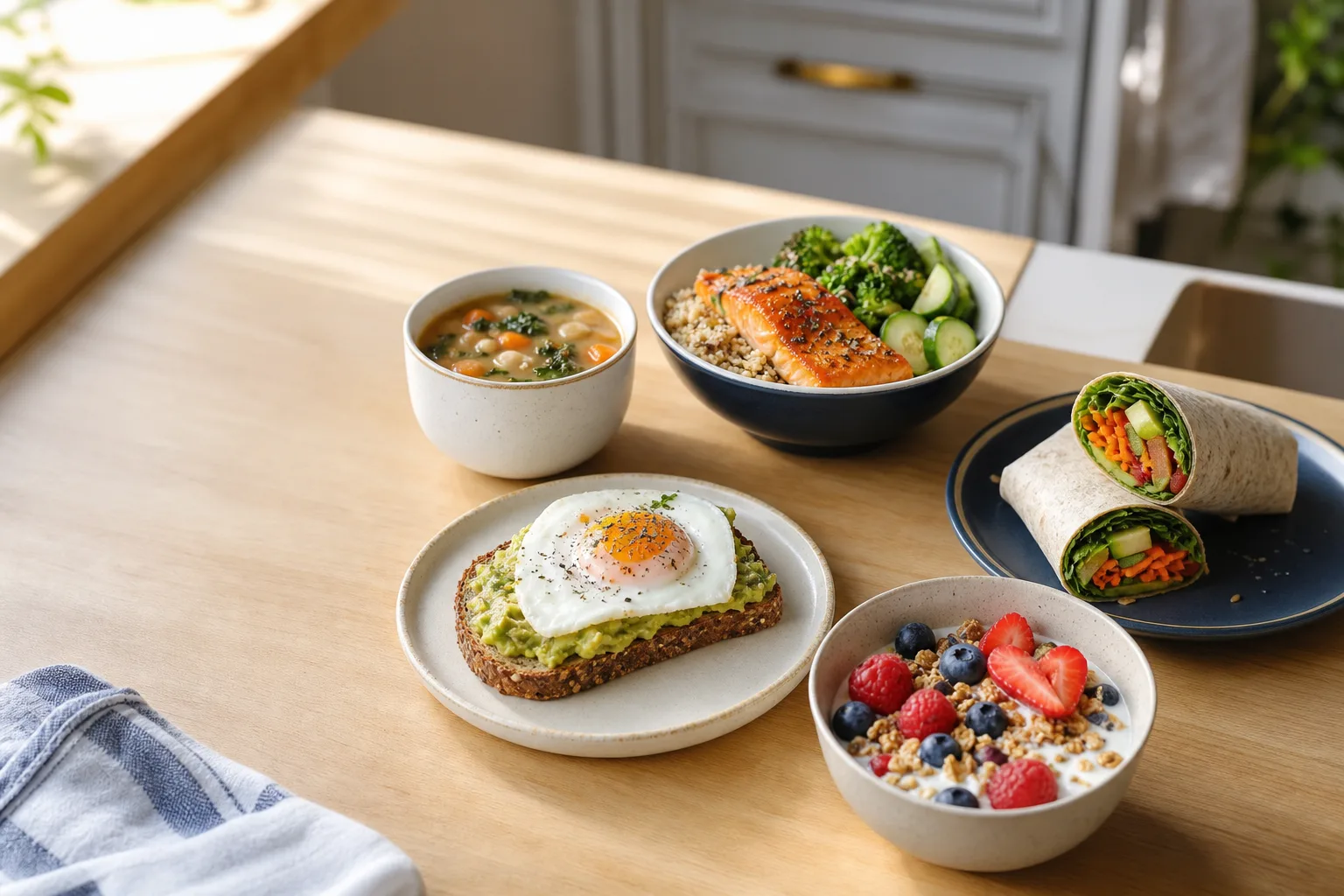
Assemble toast at home with cottage cheese and tomato, or pack chickpeas, vegetables, fruit, crackers, and a dip in separate compartments. A modular box allows the first serving to stay manageable while unused food remains protected.
Build a low-effort route into the plan. A prepared component, freezer portion, shelf-stable backup, or five-minute assembly can protect the week when time or appetite differs from what was expected. The aim of portable and at-home lunch ideas: 7–8. cottage cheese tomato toast and chickpea snack box is continuity, not a perfectly repeated schedule.
9–10. Egg avocado half-toast and freezer vegetable soup
Top half a slice of toast with cooked egg and avocado, or reheat a labeled portion of vegetable soup with beans, chicken, or tofu. These options rely on ordinary ingredients and can be enlarged or reduced without changing the whole menu.
Treat storage as part of the recipe. Cool leftovers promptly, use shallow covered containers where appropriate, label dates, follow recognized storage guidance, and discard food when safety is uncertain. Good storage makes portable and at-home lunch ideas: 9–10. egg avocado half-toast and freezer vegetable soup more useful while keeping convenience separate from guesswork.
Build the lunch station
Keep containers, utensils, cold packs, napkins, and labels together. At home, group a few lunch ingredients on one refrigerator shelf. Reducing the number of retrieval steps makes a planned lunch more likely to be used before its ingredients expire.
Review the result without grading the person. Record what was useful, what remained, which package was too large, and which option was easy to repeat. Use those observations to simplify the next version of portable and at-home lunch ideas: build the lunch station rather than adding more rules or making outcome promises.
Put the framework through three real-life checks
The routine check: Ask where portable and at-home lunch ideas fits on the busiest ordinary day, not only on an ideal weekend. Identify the equipment, time, storage, and shopping step it requires. If the plan depends on a long preparation window that rarely exists, reduce the number of components or name a genuinely easier route. A strong plan should remain understandable when attention is limited.
The flexibility check: Start with “Confirm refrigeration or hot holding.” and “Pack dressing and crisp ingredients separately.,” then imagine that schedule, appetite, or household plans change. The food should still have a safe next use, and the person should still have an acceptable choice. Flexibility does not remove boundaries: allergens, sanitation, storage temperatures, clinician-provided instructions, and personal consent remain fixed.
The evidence check: Use “Use a leakproof portion-sized container.” as a prompt to separate observable kitchen facts from health assumptions. It is reasonable to record that a package was too large or a recipe was easy to reheat. It is not reasonable for a meal planner to infer a diagnosis, medication effect, or clinical outcome. Keep private wellness information out of marketing, analytics, affiliate decisions, and editorial performance reports.
Within “10 GLP-1 Lunch Ideas for Work and Home,” one concrete application is the Lemon-Herb Chicken Quinoa Lunch for GLP-1 Meal Prep recipe, where the ingredients, portioning, substitutions, and storage notes can be evaluated in context.
A practical checklist
- Confirm refrigeration or hot holding.
- Pack dressing and crisp ingredients separately.
- Use a leakproof portion-sized container.
- Include one shelf-stable backup.
- Return reusable containers to the lunch station.
Frequently asked questions
Can lunch be smaller than dinner?
Yes, portions can vary by appetite and routine. Individual adequacy is a clinical nutrition question, so follow professional guidance where provided.
What if there is no refrigerator at work?
Choose shelf-stable options appropriate for the setting or use an insulated cold pack system according to food-safety guidance. Do not leave perishables at room temperature.
Are lunch kits only for meal prep?
No. A kit can simply group safe, ready-to-assemble ingredients for the next day without preparing several identical meals in advance.
Safety, evidence, and scope
This discussion of portable and at-home lunch ideas helps adults organize ordinary food choices. It does not diagnose or treat a condition, prescribe a diet, recommend medication or supplements, provide dosing, or interpret persistent symptoms and hydration concerns.
Editors keep food-planning observations separate from medical claims, verify health-adjacent source records, and require qualified review where the risk tier demands it. Titles, snippets, social copy, and commercial placements may never strengthen the published wording. For this page, that control is applied specifically to portable and at-home lunch ideas.
Editorial scope for portable and at-home lunch ideas: This adult general-wellness article is released only when its sources, claims, links, and any required reviewer identity satisfy the editorial workflow.
A practical GLP-1 lunch works where it will actually be eaten. The recipe should match available refrigeration, reheating, carrying time, portion flexibility, and preparation. Work and home lunches can use the same ingredients while relying on different containers, textures, or assembly methods. Compare packed bowls, soups, wraps, snack plates, toast, and planned leftovers by portability, temperature, active preparation, storage, and how the serving can adjust. Choose the setting first. Pack wet and crisp components separately, or keep a low-effort home option ready for days when plans change.Choose a lunch that fits its setting
Compare the options with concrete criteria
Apply the guide to the next meal