
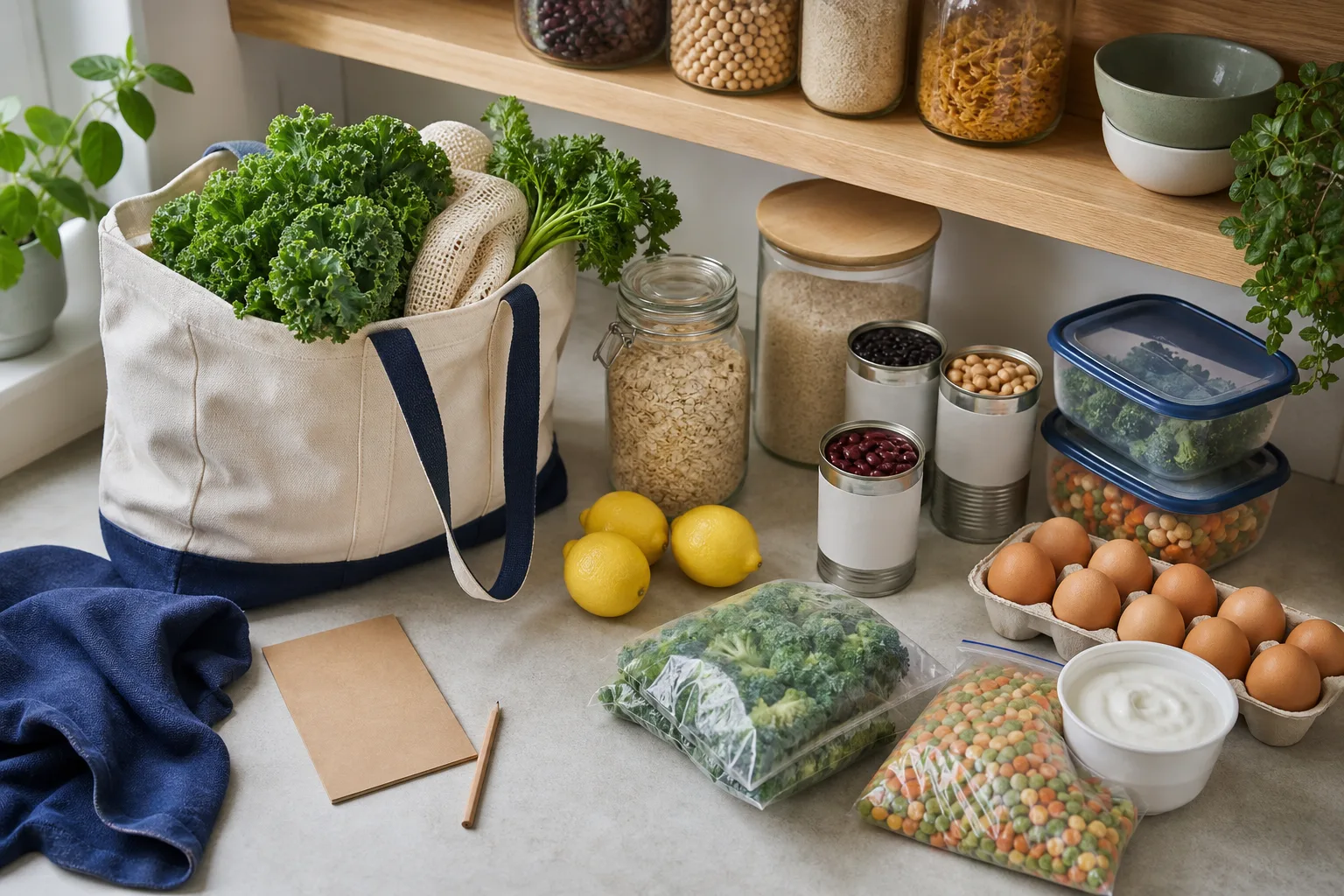
Short answer: GLP-1 meal prep can avoid excess leftovers by preparing flexible components, using two-serving recipes, freezing selected portions immediately, and keeping part of the week as quick assembly rather than batch cooking.
How to apply the short answer
Meal prep does not have to mean seven identical containers. For a smaller or changing appetite, a refrigerator full of finished meals can become pressure and waste. Preparing a few components and a few complete portions gives the week more room to change.
Decide first what needs cooking, what only needs washing or portioning, and what is already convenient. A useful prep session can be thirty focused minutes rather than an all-day production.
Start with the GLP-1 grocery-list framework to place the article inside its main food-planning framework.
Prep two components and one finished meal
Cook one protein food or legume, one grain or vegetable component, and one complete dish that freezes or reheats well. This provides building blocks plus a dependable option without committing every ingredient to the same flavor or portion size.
Turn this idea into one written decision before the week begins. Note the smallest useful version, a familiar alternative, and anything that must stay fixed because of an allergy, preference, budget, or food-safety rule. That makes small-batch meal preparation: prep two components and one finished meal a real planning tool instead of another standard to meet.
Use a two-day refrigerator horizon
Prepare only the fresh assemblies likely to be used in the next day or two. Keep later-week ingredients frozen, sealed, or uncut when that preserves quality. Storage windows differ by food, so verify current authoritative guidance rather than relying on a universal number.
Keep the portion adjustable at serving time. Store components separately when practical, serve a modest amount first, and keep the remainder safely chilled rather than placing the full recipe on the plate. In the context of small-batch meal preparation: use a two-day refrigerator horizon, flexibility is a design feature, not a failure to follow the plan.
Freeze the second portion before it becomes a leftover
When a recipe makes more than the next two meals require, cool and freeze a labeled portion promptly. Early freezing preserves a clear purpose for the food. Use containers sized for the amount you will thaw, since repeated thawing and refreezing can affect safety and quality.
Make the shopping list reflect the actual household. Check package sizes, choose ingredients that can appear in more than one meal, and give every perishable item a first use and a backup use. This is how small-batch meal preparation: freeze the second portion before it becomes a leftover can reduce friction without creating an oversized refrigerator inventory.
For a connected kitchen example, continue with pantry staples while the practical decision above is still in view.
Keep sauces and textures separate
Store dressings, crunchy toppings, cooked grains, vegetables, and protein foods separately when practical. This protects quality and lets a bowl become a wrap or soup accompaniment later. It also allows an adjustable first serving without opening several full meal containers.
Build a low-effort route into the plan. A prepared component, freezer portion, shelf-stable backup, or five-minute assembly can protect the week when time or appetite differs from what was expected. The aim of small-batch meal preparation: keep sauces and textures separate is continuity, not a perfectly repeated schedule.
Schedule one no-prep and one pantry meal
Leave space for yogurt and fruit, eggs and toast, a bean soup, canned fish with crackers, or another familiar option. A planned no-prep meal is part of the system, not evidence that meal prep failed. Choose foods that match allergies and preferences.
Treat storage as part of the recipe. Cool leftovers promptly, use shallow covered containers where appropriate, label dates, follow recognized storage guidance, and discard food when safety is uncertain. Good storage makes small-batch meal preparation: schedule one no-prep and one pantry meal more useful while keeping convenience separate from guesswork.
Conduct a midweek inventory
Before cooking again, count prepared portions, note produce that needs using, and move a freezer item to the refrigerator only when you intend to use it. Update the plan around what remains instead of automatically producing another batch.
Review the result without grading the person. Record what was useful, what remained, which package was too large, and which option was easy to repeat. Use those observations to simplify the next version of small-batch meal preparation: conduct a midweek inventory rather than adding more rules or making outcome promises.
Put the framework through three real-life checks
The routine check: Ask where small-batch meal preparation fits on the busiest ordinary day, not only on an ideal weekend. Identify the equipment, time, storage, and shopping step it requires. If the plan depends on a long preparation window that rarely exists, reduce the number of components or name a genuinely easier route. A strong plan should remain understandable when attention is limited.
The flexibility check: Start with “Prep two flexible components.” and “Make one complete freezer-suitable meal.,” then imagine that schedule, appetite, or household plans change. The food should still have a safe next use, and the person should still have an acceptable choice. Flexibility does not remove boundaries: allergens, sanitation, storage temperatures, clinician-provided instructions, and personal consent remain fixed.
The evidence check: Use “Limit fresh assemblies to near-term use.” as a prompt to separate observable kitchen facts from health assumptions. It is reasonable to record that a package was too large or a recipe was easy to reheat. It is not reasonable for a meal planner to infer a diagnosis, medication effect, or clinical outcome. Keep private wellness information out of marketing, analytics, affiliate decisions, and editorial performance reports.
Within “GLP-1 Meal Prep Without a Fridge Full of Leftovers,” one concrete application is the Make-Ahead Egg Bites for a GLP-1 Breakfast recipe, where the ingredients, portioning, substitutions, and storage notes can be evaluated in context.
A practical checklist
- Prep two flexible components.
- Make one complete freezer-suitable meal.
- Limit fresh assemblies to near-term use.
- Store sauces and toppings separately.
- Inventory before the next prep session.
Frequently asked questions
How many days should I meal prep at once?
There is no universal answer. Prepare only what can be stored safely and is likely to be used; keep later ingredients unprepared or frozen where appropriate.
Do I need special meal-prep containers?
No. Clean, food-safe, leak-resistant containers in useful sizes are sufficient. Choose clear labeling and safe storage over a particular brand.
Can meal prep include purchased components?
Yes. Frozen vegetables, cooked grains, canned beans, yogurt, or prepared proteins can reduce work. Check labels, allergens, storage, and preparation instructions.
Safety, evidence, and scope
GLP1DIET presents small-batch meal preparation as general-wellness planning for adults, not individualized clinical nutrition. Medication selection, adverse effects, symptoms, treatment, and dosing belong with an appropriately licensed clinician.
The maintenance record for this topic tracks sources, supported claims, review dates, and link status. Search demand and conversion goals cannot lower the evidence threshold or turn private wellness activity into an editorial signal. For this page, that control is applied specifically to small-batch meal preparation.
Editorial scope for small-batch meal preparation: This adult general-wellness article is released only when its sources, claims, links, and any required reviewer identity satisfy the editorial workflow.
GLP-1 meal prep works best when components remain flexible and batch sizes match the household. Smaller pans, half-recipes, freezer portions, and planned second uses prevent one cooking session from creating several identical meals that no longer feel appealing. Compare a finished batch with component preparation by storage life, texture changes, assembly time, freezer space, and whether another household member needs a larger serving. Prepare one protein component and one produce component. Leave sauces, grains, and crisp toppings separate so tomorrow’s meal can change shape.Meal prep without unwanted leftovers
Compare the options with concrete criteria
Apply the guide to the next meal